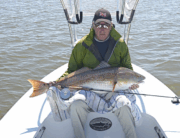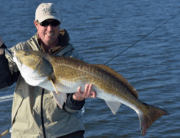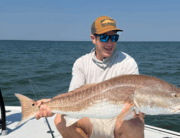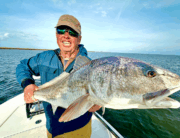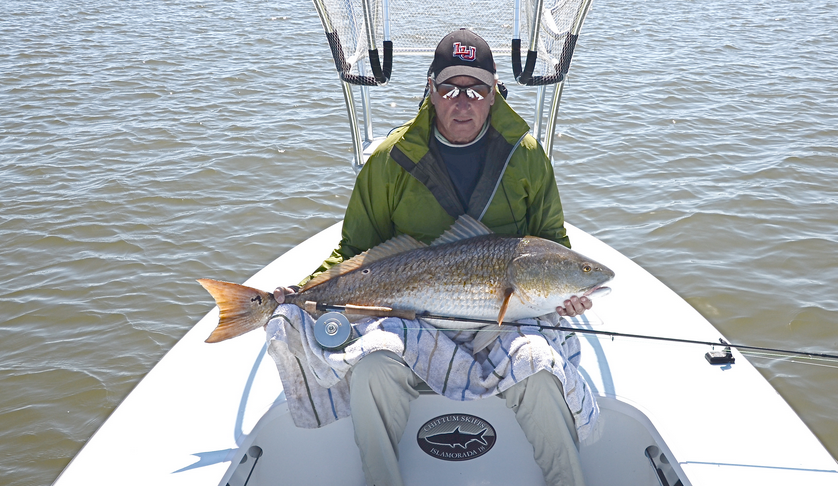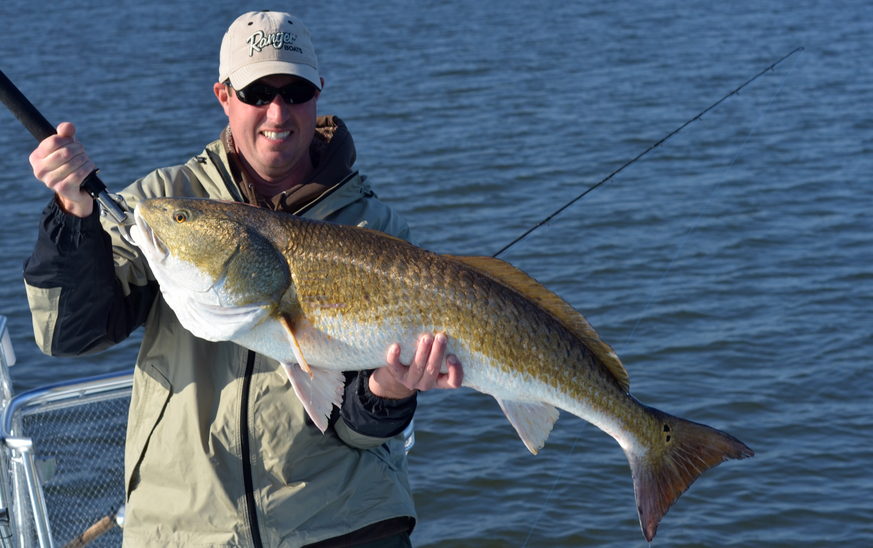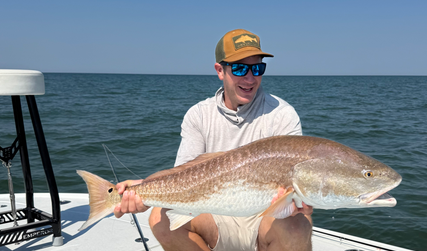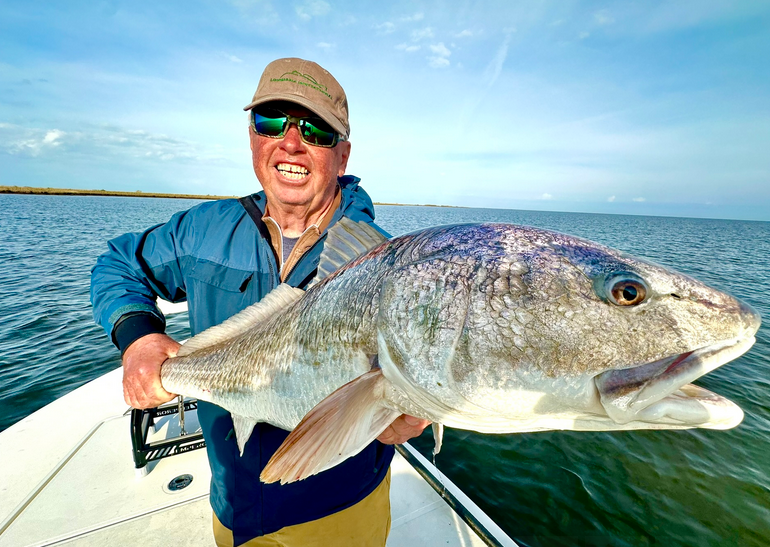
January in Louisiana isn’t for the faint of heart, but if you’re serious about chasing the largest redfish on a fly rod, it’s absolutely the time to be here. The water is cold, the conditions can be unforgiving, but the redfish? They’re hungry, aggressive, and absolutely massive.
I’ve been guiding fly fishermen to monster reds for over two decades, and I can tell you without hesitation—January offers some of the most explosive opportunities of the year to tangle with 30 to 35-pound redfish on fly gear. These aren’t your typical slot-size fish. These are the bulldozers that will test everything about your setup and your nerve.
Why January?
When the calendar flips to January, Louisiana’s bays undergo a transformation. The water temperature drops to the mid-50s, pushing baitfish into concentrated areas and triggering a feeding frenzy among the biggest redfish in the system. These fish are fattening up before the depths of winter, and they’re doing it with purpose.
The cooler water also makes the giant reds more predictable. They’re not scattered; they’re holding in specific zones where bait congregates. Deep holes, mud banks with adjacent shallow flats, and channel edges become highways for trophy-class redfish. As a guide, this is when I can put clients in front of genuine monsters with surprising consistency.
The Right Equipment
Let me be direct: you cannot fool around with your gear when you’re targeting 35-pound redfish on the fly. This isn’t the place for light tackle dreams.
You need a 9-weight minimum—I strongly prefer 10-weight. These fish have raw power that will expose every weakness in your setup. A quality saltwater fly rod with a fighting butt is essential. When you’re battling a red that weighs as much as a small child and has the stubbornness of a submarine, that extra leverage matters.
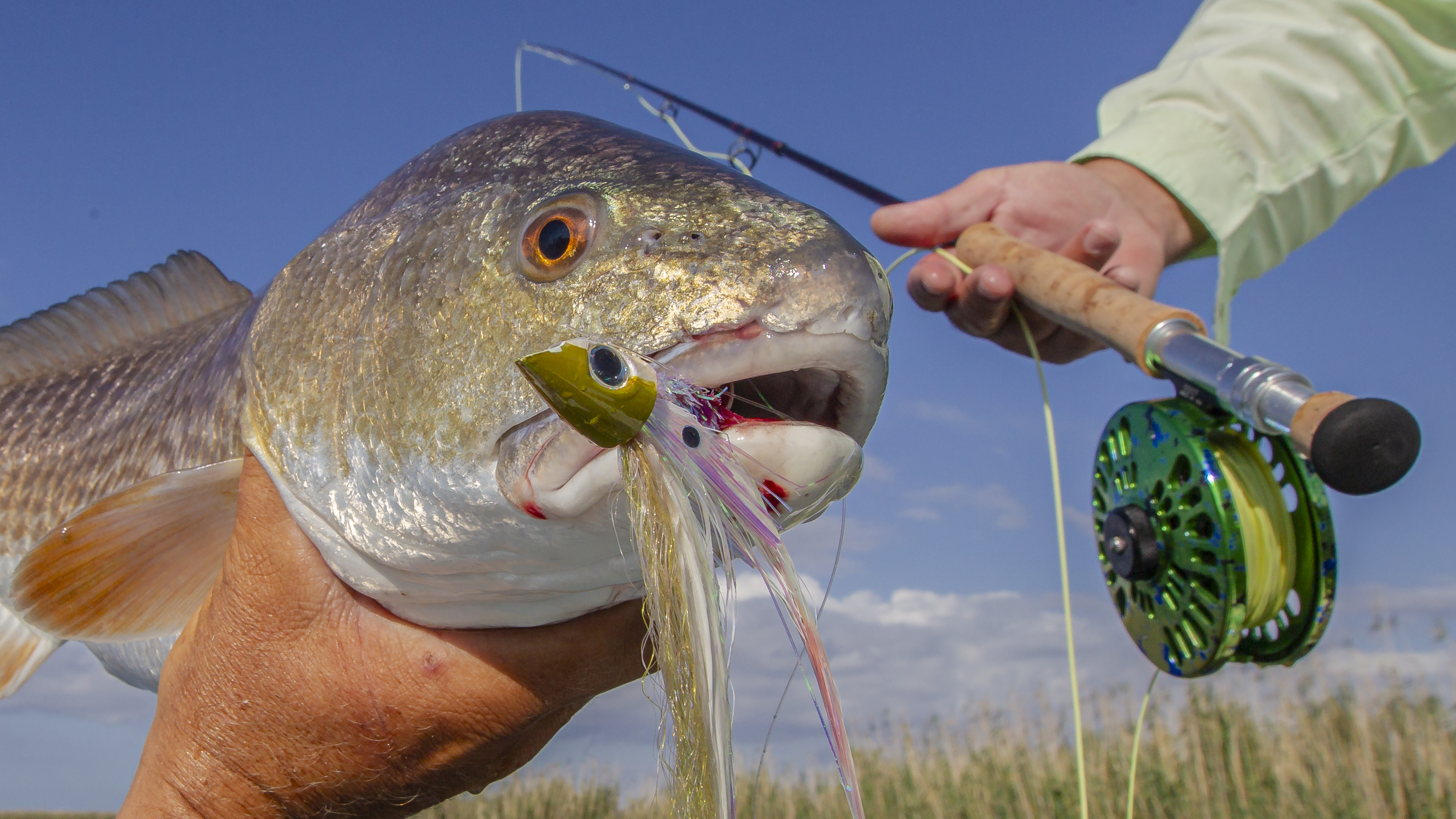
Your reel absolutely must have a sealed drag system and hold at least 300 yards of backing. I’ve had redfish strip 150 yards without hesitation. A quality saltwater-specific reel isn’t optional; it’s mandatory. The drag needs to be smooth and reliable—there’s no room for surprises when you’re locked up with a 35-pounder.
For fly line, go with a weight-forward floating line in the 10-weight. You want something that cuts through Louisiana’s wind and loads your rod efficiently. In January, we’re often dealing with water clarity that allows you to sight-fish from 40 to 60 feet away, so presentation matters.
Flies That Work
I’ve probably thrown every redfish fly ever designed at these giant fish, and I keep coming back to a handful of proven patterns.
Large baitfish imitations are king. I’m talking #1/0 to #3/0 shrimp flies and mullet patterns. Clouser Deep Minnows in larger sizes consistently produce. The redfish in January are keyed on substantial meals—they want flies with real bulk and profile. Wimpy flies get wimpy results.
The color story changes based on water conditions, but chartreuse and white, all black, and natural colors like tan and gray all have their days. I match the predominant forage and conditions, but honestly, confidence in your fly matters more than the exact shade. A fly you throw with conviction will outfish a “better” pattern thrown without faith.
Don’t overlook crab patterns either. Oversized crabs in brown and tan can trigger absolutely vicious strikes, especially around structure and darker water where redfish are hunting.
Reading the Water
January redfish on the fly demand that you slow down and actually see your fish. This is sight-fishing at its finest, and it’s what separates memorable days from forgettable ones.
Early morning provides the best light for spotting fish. Look for the subtle disturbances—a nervous baitfish school, a nervous wake, or the telltale copper flank of a large red pushing through shallow water. These fish don’t hide from experienced eyes; you just have to know what you’re looking for.
Focus on the transitions: deeper water adjacent to shallow flats, channel drops, and the inside bends of bayous. Redfish stage in these spots, particularly when the tide is moving. They position themselves to ambush bait being pushed by current. Fish the edges methodically and with patience.
Wind is your friend in January, despite the discomfort. A steady breeze creates chop that makes fish less spooky and actually pushes baitfish around, triggering feeding behavior. Some of my best days have been on breezy mornings when fair-weather anglers stayed home.
The Cast and the Fight
When you spot a giant redfish, you’ve got roughly 5 to 10 seconds to make a quality presentation. These fish spook as easily as any saltwater quarry, so precision matters. Aim for a spot 3 to 4 feet ahead of the fish’s path, let the fly sink slightly, and prepare for what comes next.
The strike is unforgettable. Thirty-five pounds of redfish doesn’t tap your fly—it commits. Strip-set hard. Really hard. You need that hook buried deep because these fish have tough mouths and will use their head-shaking and raw power to work free.
Once you’re hooked, keep your rod tip up and your pressure constant. Don’t horse the fish—that’s a path to broken rods and cut leaders—but don’t give up line either. Let your drag do its job. These redfish make runs, hard ones, so you’ll feel your backing deplete faster than you’d like. Stay calm. Stay focused. When the fish tires, you advance, when it runs, you give line.
The final moments are the most critical. Big redfish get dangerous near the boat. They know they’re in trouble, and they’ll make one last desperate surge that can tangle lines or create slack at the worst moment. Keep pressure, bring them to the boat with confidence, and have your guide ready for the lift.
January, Louisiana, and You
If you’re a fly fisher who dreams of tussling with genuine trophy redfish, January in Louisiana is calling. The cold water, the concentration of massive fish, and the sight-fishing opportunities create conditions that simply don’t exist elsewhere.
Come prepared, come patient, and come ready to be humbled and thrilled in equal measure. I’ll be here on the water, pointing clients at redfish that make their hands shake before the cast and their hearts soar when that 35-pounder finally gets boated.
This is why we chase them. This is why we come back.
—Capt. Gregg Arnold