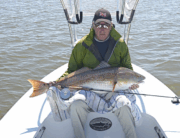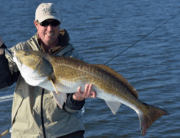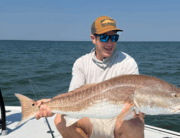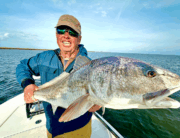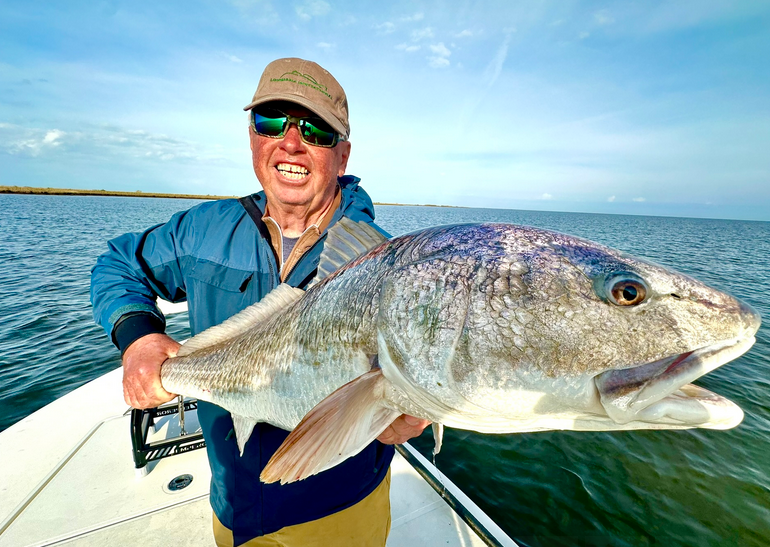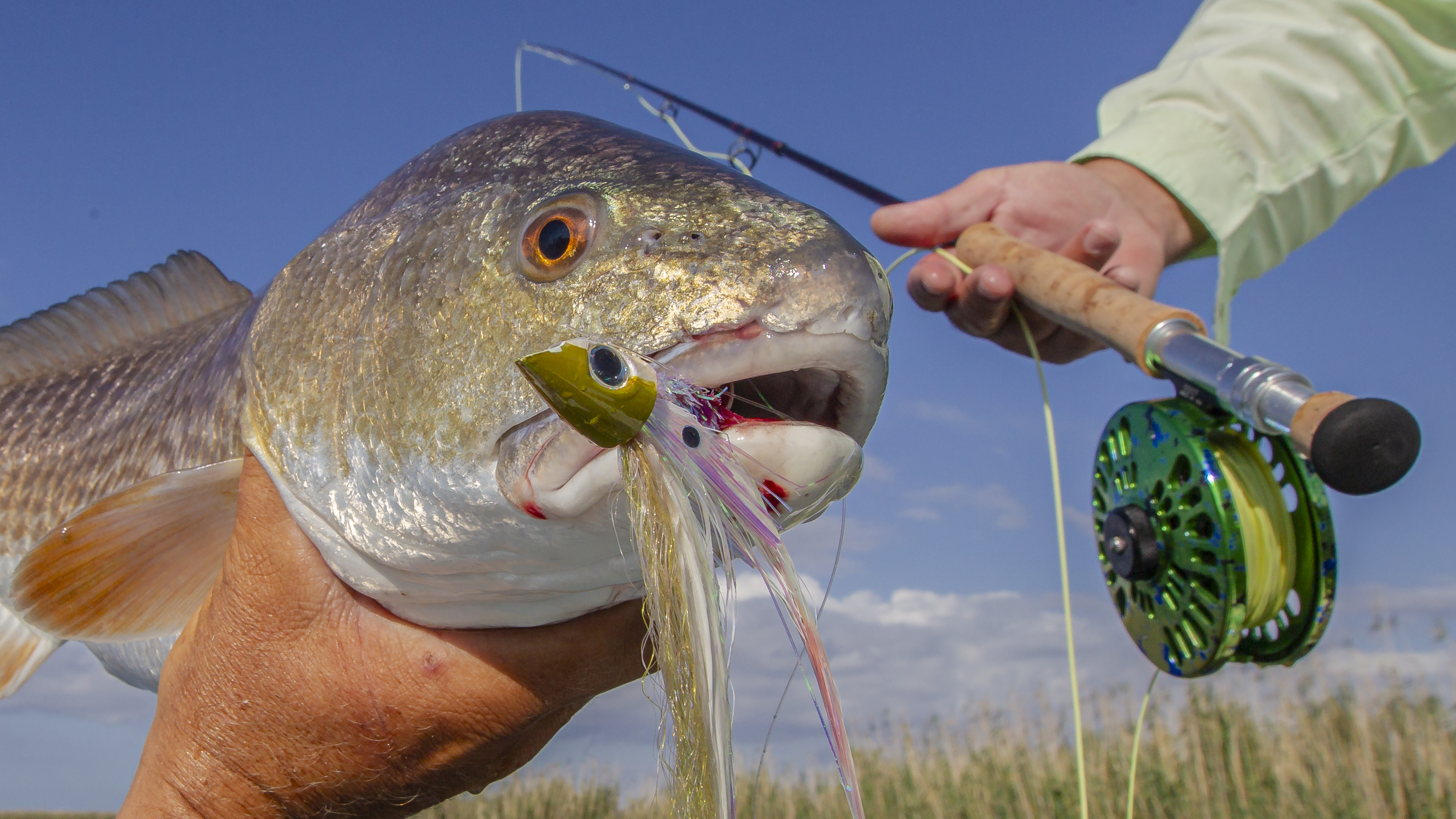
We’re in the heart of January, and if you’re thinking about booking a Louisiana fishing charter this month, I want to give you the honest truth about what you can expect. The water is cold, conditions can be challenging, but the fishing? It’s absolutely exceptional.
Water Conditions and Weather
Let’s start with what you need to know about Louisiana’s January conditions. Water temperatures are hovering in the mid-50s, which means you’ll want quality polarized sunglasses, long sleeves, and the willingness to dress in layers. The air temperature can swing from the 40s at dawn to the 60s by afternoon, and the wind is absolutely a factor you need to respect.
Wind is consistent this time of year. We’re seeing steady breezes in the 10-15 mph range most days, with gusts that can push toward 20. This isn’t ideal for comfort, but it’s ideal for fishing. The wind pushes baitfish around, creates chop that makes redfish less skittish, and triggers feeding behavior. I’ll take a windy January day over a calm one for fly fishing charters in Louisiana any time.
Visibility in the water is actually quite good right now. The cooler temperatures seem to settle sediment, and we’re seeing water clarity in the 2-3 foot range in many areas—good enough for serious sight-fishing. That’s exceptional for Louisiana standards.
Redfish on the Fly: Peak Season
Here’s the bottom line: January is prime time for redfish on the fly in Louisiana. The biggest fish of the system are concentrated, feeding aggressively, and highly catchable if you know where to look and how to present.
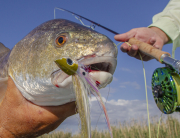
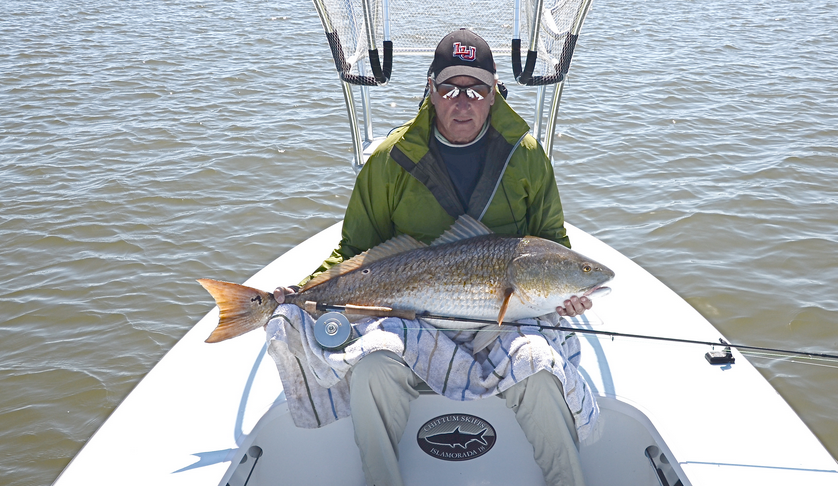
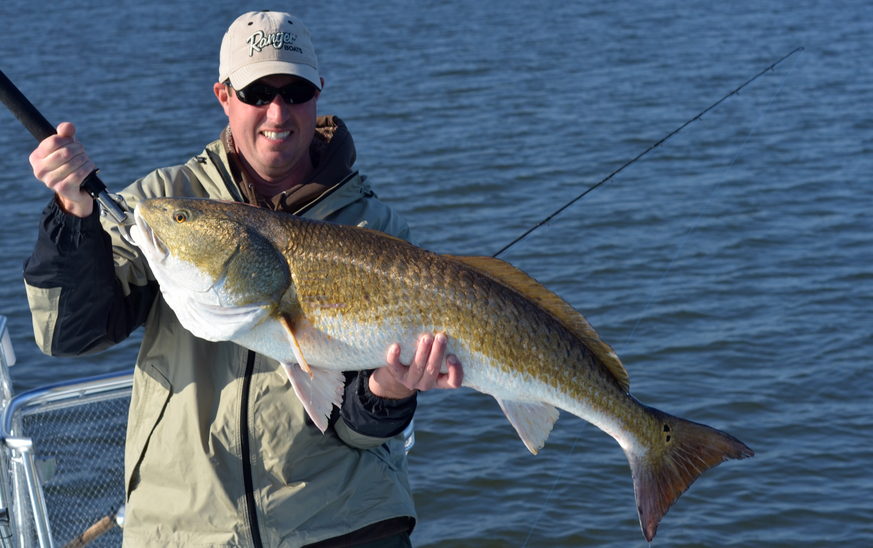
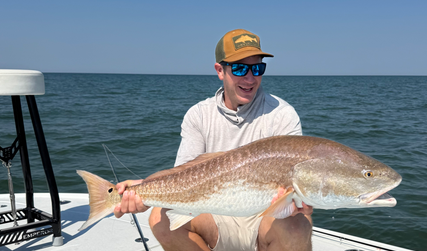
We’re targeting fish in the 25 to 35-pound range consistently right now. Not every cast, but regularly enough that you can go a full day on a Louisiana fishing charter and have multiple opportunities at genuine trophy redfish. The smaller slot-size fish are there too, but January’s real gift is access to the giants.
The redfish are holding in specific zones: deep holes adjacent to shallow feeding flats, mud banks with good current flow, channel edges, and the inside bends of major bayous. Early morning and the first couple hours after sunrise are prime time. Fish feed aggressively then, and the light is perfect for sight-fishing. Mid-day fishing is slower but still productive. Late afternoon picks back up as the light angles differently.
I’ve had days this January where we’ve spotted and cast to redfish every 15 to 20 minutes. Some refused the fly, some pounded it, and some we missed through angler error or bad luck. That’s the reality of sight-fishing. But the opportunity is there like few other times of year.
Tarpon and Other Species
Don’t assume January is redfish-only on a Louisiana fly fishing charter. Tarpon are present, though not in the numbers we see in spring and summer. If we spot them—and we often do in the deeper bayous—they’re catchable. January tarpon tend to be less aggressive than their warmer-water counterparts, but that’s also when you get truly giant tarpon, the 100+ pound fish that earn serious respect.
Spotted seatrout are active right now. These fish are excellent for developing your fly-fishing skills and provide steady action throughout the day. Trout in January run in the 3 to 5-pound range, with occasional fish pushing toward 7 pounds. They’re not the headline attraction, but they’re reliable and rewarding.
False albacore have been showing up in pockets of deeper water. If you’re interested in fast-action, explosive surface fly-fishing, this is a bonus opportunity. We won’t specifically target them, but if we spot a school, we’ll switch tactics and go after them.
What to Bring and How to Prepare
For fly fishing charters on a Louisiana fishing charter in January, you need the right gear. A 9 or 10-weight rod is essential—8-weight will get you beat down by a 30-pound redfish. Your reel needs to hold 300+ yards of backing. Bring multiple reels if you have them; there’s nothing worse than having a broken reel with a day full of shots at trophy redfish ahead.
Bring flies in large sizes: #1/0, #2/0, and #3/0 patterns. Clouser Deep Minnows, baitfish imitations, and oversized shrimp flies. Have them in natural colors, chartreuse and white, and all black. Bring more than you think you’ll need—redfish can be rough on flies, and losing a good one to a fish is part of the game.
Dress in layers. Bring a heavy jacket—it may feel extreme when you’re sitting still on the boat in 50-degree weather, but you’ll be grateful for it. Waterproof gloves are a real consideration. Your hands will get wet, and the wind chill is real. Good quality polarized sunglasses are non-negotiable; they’re how you see the fish that make the day.
Bring a cooler with water and snacks. High-performance fly-fishing in cold weather burns calories fast. Stay hydrated and fueled, even when you don’t think you need to. It makes a difference in your casting and your mental focus.
Realistic Expectations
I want to be honest with you about what a January Louisiana fishing charter delivers. You will not catch redfish on every cast. You will miss fish. You will spook fish. You will have long stretches where you don’t see anything despite the guides being thorough and experienced.
But you will also have moments that change how you think about fly fishing. You’ll see a massive redfish in water so shallow it’s nearly beached. You’ll make a cast and watch it eat your fly with commitment that’s unmistakable. You’ll feel that strike translate through your fly line, and you’ll realize why people dedicate their lives to this.
You’ll probably catch redfish on the fly. You’ll probably catch several. You might catch a big one. You might catch a giant. And you’ll definitely leave with a better understanding of how to hunt saltwater fish.
The Bottom Line
January on a Louisiana fly fishing charter is for serious anglers. It requires commitment to conditions, a willingness to work hard, and the patience to cast to fish that might refuse you. It’s not the easiest month to fish, but it’s absolutely the best month if you want to tangle with trophy redfish on the fly.
We’re running full days right now, and we’re getting quality. The redfish are here, they’re hungry, and they’re big. The window is open, but it won’t stay open forever—February brings a shift in conditions, and by spring, the fish have dispersed.
If January resonates with you, if you’re ready to test yourself against genuine trophy redfish on the fly in Louisiana, book your charter now. Spots are filling up for good reason.
The water’s cold, the fish are hot, and the opportunity is real.
—Capt. Gregg Arnold