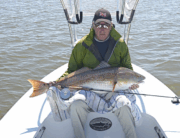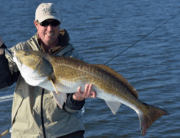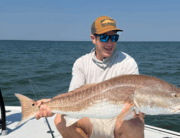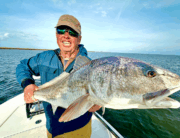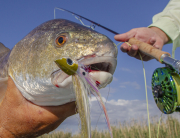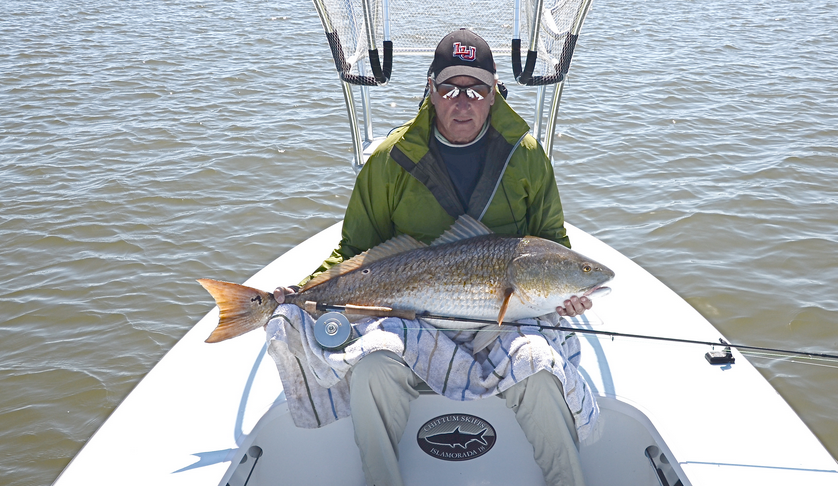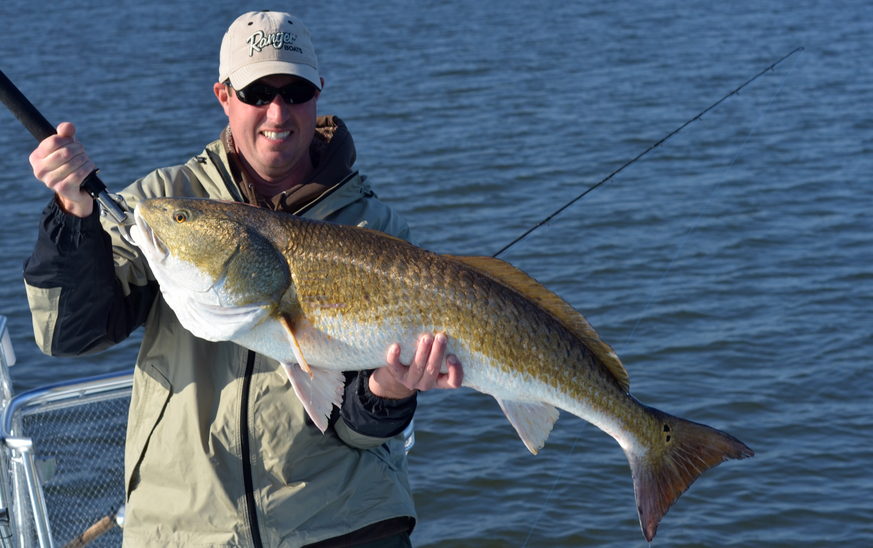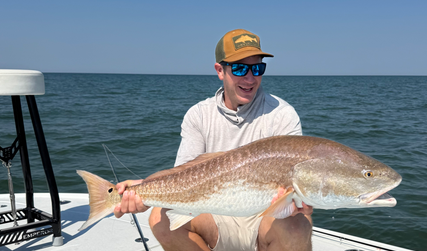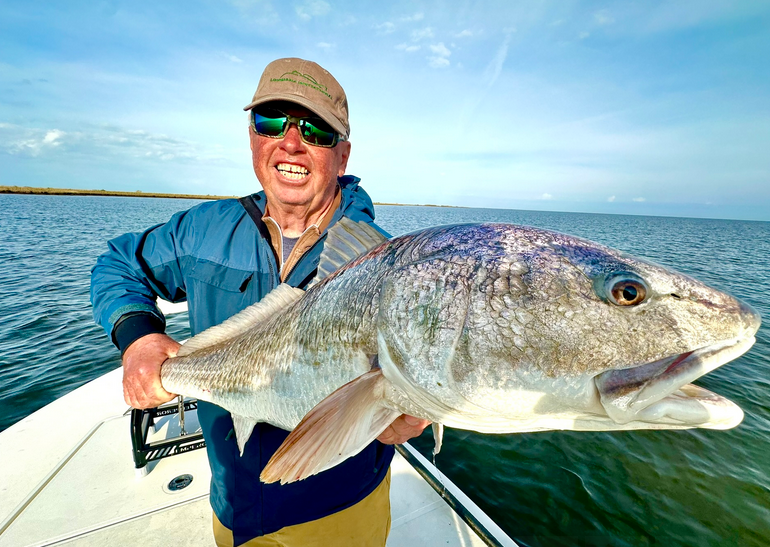
There’s something primal about winter fly fishing for Louisiana bull redfish. The cold water, the clear skies, and the explosive takes of trophy-sized reds on the end of a fly line create moments that define angler’s careers. I’m Capt. Gregg Arnold, and through years of guiding anglers on Louisiana fly fishing charters, I’ve discovered that winter offers the most rewarding fly fishing season for serious redfish hunters.
Most anglers think of fly fishing Louisiana’s redfish as a warm-weather pursuit. They picture calm summer mornings on grass flats, with fish tailing in skinny water. Winter shatters that perception entirely. When temperatures drop and the rest of the fishing world quiets down, savvy fly fishermen on Louisiana fly fishing charters discover that winter is when the biggest, most aggressive bull redfish become catchable on the fly. The fish are concentrated, motivated, and responding to presentations that would be ignored during the abundance of warmer months.
Winter water temperatures in Louisiana range from 50 to 60 degrees Fahrenheit, and this temperature window is where fly fishing excellence happens. The cold slows redfish metabolism, but it doesn’t stop them from hunting. Instead, it makes them more deliberate, more focused, and ultimately more responsive to well-presented flies. Bull redfish in winter aren’t scavenging randomly—they’re hunting with purpose. We’re consistently finding redfish up to 35 pounds during these months, trophy-sized fish that represent the peak of what Louisiana’s redfish fishery has to offer. When you book Louisiana fly fishing charters during these months, you’re positioning yourself to intercept fish that are actively feeding on concentrated forage and reach sizes that most anglers only dream about.
The cooler water brings another advantage that shouldn’t be underestimated: clarity. Without summer’s thick vegetation and algal blooms, you’ll find dramatically improved visibility in many Louisiana systems. This clarity transforms fly fishing from a guessing game into a visual experience. Sight-fishing becomes the primary method, and there’s nothing more exciting than watching a bull redfish charge your streamer from fifteen feet away. The moment you see that mouth open and the fly disappear, you understand why winter fly fishing draws dedicated anglers back year after year.
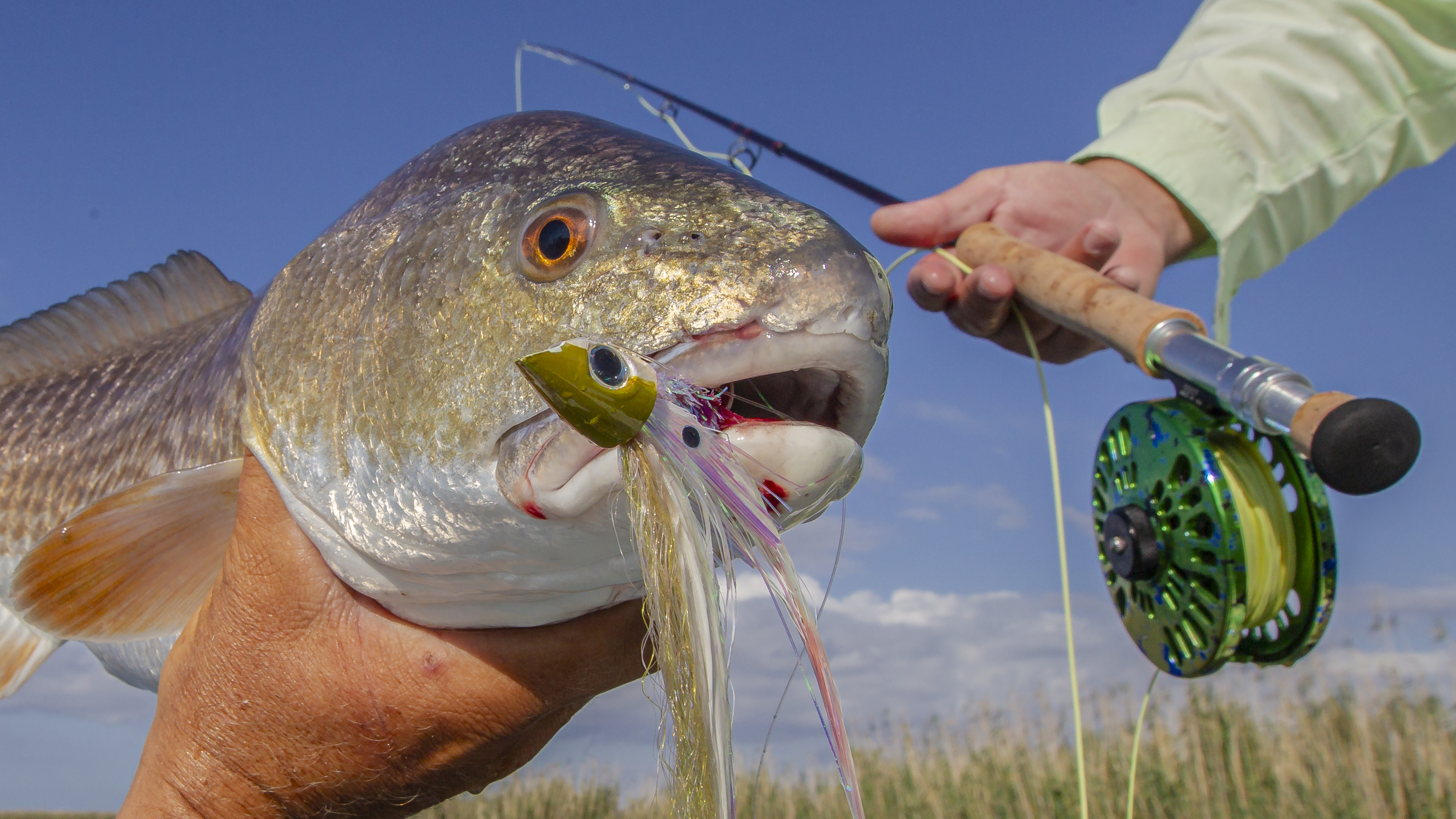
Understanding winter fly patterns is fundamental to success. These aren’t the small, delicate presentations you might throw during summer. Winter demands flies that command attention and imitate the substantial forage available during colder months. Large mullet patterns in the 3 to 4-inch range are consistent producers. Black Death flies work exceptionally well, as do Deceivers tied in dark color combinations featuring blacks, charcoals, and dark olives. The key is creating flies with substantial profiles and good water displacement.
Shrimp patterns still work during winter, but I increasingly rely on baitfish imitations. The natural forage base shifts in winter, with mullet and pigfish becoming primary targets for hunting bull redfish. When you’re on Louisiana fly fishing charters, your guide will have an arsenal of patterns specifically designed to match winter conditions. Flies tied on 2/0 to 3/0 hooks provide the right balance of castability and presence. These aren’t oversized or unwieldy—they’re perfectly proportioned for accurate casting and natural presentation.
Material selection matters significantly when tying winter flies. Synthetic fibers like Craft Fur and EP Fibers hold their shape better in cold water than natural hair materials. They also create more consistent water-moving action throughout the retrieve. Eyes matter too. I prefer to use fairly large, weighted eyes that help achieve faster sink rates and create underwater flash that attracts attention. When fishing deeper winter channels through Louisiana fly fishing charters, getting your fly to the strike zone quickly is essential.
The casting demands of winter fly fishing require preparation. Wind is constant during Louisiana’s winter months, and these crosswinds demand technique. You’ll need a 9-weight rod at minimum, though many guides favor 10-weight rods when conditions turn particularly challenging. The heavier rod weight provides the backbone to throw larger flies into the wind while maintaining accurate placement. Your reel needs a smooth drag—winter bull redfish make powerful first runs that test equipment to its limits. Fish weighing up to 35 pounds will expose any weakness in your drag system, and when one of these trophy redfish takes your line, you’ll want equipment that’s absolutely bulletproof.
Fly line choice becomes critical in winter conditions. Sink-tip lines are essential tools. I primarily fish with 200 to 300-grain sink-tip lines that allow me to reach deeper winter holding structure efficiently. Fast-sinking tips in the 250-grain range give you the versatility to fish varying depths without constantly changing lines. Clear or neutral-colored lines work better than bright colors in the clearer winter water. When you’re on Louisiana fly fishing charters, experienced guides have multiple line configurations ready because water depths and conditions shift throughout the day.
Reading winter water determines everything. Bull redfish congregate in the deepest pockets available within each system. Use your sounder to identify channel ledges, deep holes, and transition zones where water depth changes dramatically. These aren’t random formations—they’re redfish highways. Fish move along these channels predictably, hunting concentrations of bait. When you understand the water layout and redfish movement patterns from Louisiana fly fishing charters, you can position yourself to intercept fish systematically rather than casting randomly.
Salinity patterns influence winter fish locations significantly. Winter rains create freshwater input that dramatically affects salinity in Louisiana’s coastal systems. Bull redfish respond by moving toward areas with more consistent brackish to slightly saline water. These stable salinity zones concentrate forage and predators alike. Your guide on Louisiana fly fishing charters monitors these patterns constantly, knowing that a freshwater push upstream often means fish will move to predictable brackish water zones where they’ll hunt aggressively.
The actual presentation technique in winter differs from warmer-season approaches. Position your boat to make long casts, typically 50 to 70 feet, into target structure. Allow your fly to sink completely into the strike zone before beginning your retrieve. I favor a dead-drift presentation initially, letting the fly settle into deeper pockets with minimal movement. After the fly reaches the appropriate depth, I strip it back with medium-length pulls, pausing between strips to allow the fly to flutter momentarily. This combination of movement and pause mimics an injured baitfish and often triggers explosive strikes from resting redfish.
Strip speed matters tremendously. In winter, slower is almost always better than faster. These fish aren’t chasing fast-moving presentations in cold water. They’re making deliberate, calculated decisions about whether a fly is worth the energy expenditure. Experiment with strip speed and pay attention to when strikes occur. You’ll often find that the slight pause after your strip triggers the take rather than the movement itself. Many anglers fishing Louisiana fly fishing charters are surprised at how methodical winter redfish behavior actually is.
Casting accuracy becomes your primary skill during winter fly fishing. You’ll often sight-fish to visible redfish holding in deeper areas. These aren’t finicky shallow-water fish that require perfect presentation distances. They’re aggressive predators in their winter hunting zones. Place your fly 8 to 10 feet ahead of the fish’s path, allowing it to sink slightly before the redfish intercepts it. A cast that lands directly on top of a bull red often results in immediate rejection. Accuracy within a few feet makes the difference between hooked fish and refusals.
Wind conditions in Louisiana during winter present challenges that actually favor fly fishermen. While spinning anglers often struggle with wind resistance on lighter lures, fly fishermen can work heavier fly lines and wind-cutting presentations effectively. What appears to be problematic weather from a summer fishing perspective becomes advantageous in winter. The chop and reduced visibility that wind creates help you approach redfish without detection. Guides on Louisiana fly fishing charters actually seek certain wind conditions specifically because they know these conditions produce exceptional bite windows.
Overcast days and low-light periods dominate winter fly fishing success. Unlike summer fishing where bright sun and clear water offer advantages, winter fishing actually improves during cloud cover. Light penetration decreases, making redfish less cautious about feeding. Early morning and late afternoon windows remain productive, but often the bite extends into midday during overcast conditions. Your best winter days are often those that summer anglers would skip—gray, windy, and cold. When you book Louisiana fly fishing charters during these seemingly poor conditions, you’ll often experience some of the fastest action of the season.
The physical demands of winter fly fishing shouldn’t be underestimated. These are powerful fish fighting in cold water, and they’ll test your endurance. You need quality waders—not the light, breathable waders of summer, but genuine insulated waders rated for cold water. A good thermal base layer, waterproof jacket, and insulated gloves are essential. Falling in during winter isn’t just uncomfortable; it’s potentially dangerous. Dress appropriately, and you’ll stay comfortable throughout full days of casting and fighting fish.
The mental aspect of winter fly fishing is equally important as the physical side. These aren’t easy fish by any stretch. You’ll experience refusals, missed strikes, and long periods without action. The clarity that makes visual presentation possible also means these fish see your fly clearly and sometimes reject it without hesitation. Patience and persistence separate successful winter fly fishermen from those who give up. Every cast matters in winter, and the focused concentration required creates a meditative state that many fly fishermen describe as the core appeal of the sport.
Winter fly fishing for Louisiana bull redfish represents fly fishing at its most rewarding and challenging level. These aren’t beginner-friendly conditions, but they’re not impossibly difficult either. What they are is genuine—raw fishing where success comes from understanding fish behavior, reading water, making accurate casts, and presenting flies with precision. When you experience that moment where a 35-pound bull redfish crushes your fly line and screams across cold winter water, you’ll understand why so many dedicated anglers specifically schedule Louisiana fly fishing charters during winter months.
If you’re ready to elevate your fly fishing game and experience winter redfish fishing at its finest, I’m here to guide you through Louisiana’s most productive season. Bring your 9-weight rod, your best streamer patterns, and your commitment to excellence. Winter is calling, and bull redfish are waiting.